Recycling and Sustainability at Landscaping Crystal Palace
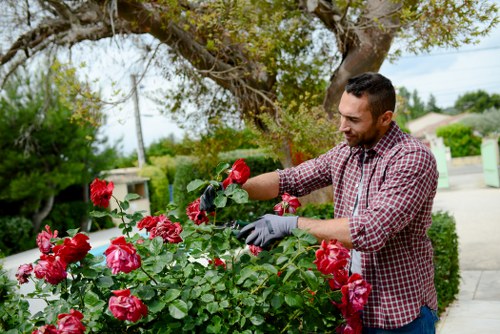 At Landscaping Crystal Palace, sustainability is not treated as a side note; it is built into the way outdoor spaces are planned, maintained, and renewed. Our recycling-focused landscaping approach looks at every stage of a project, from the removal of old turf and soil to the reuse of timber, stone, plant matter, and packaging. By prioritising responsible waste handling, we help reduce landfill use while supporting greener, cleaner neighbourhoods across Crystal Palace and the wider South London area.
One of our main goals is to reach a recycling percentage target of 85% for suitable project waste, with a steady push toward even higher rates where materials allow. This includes separating green waste, soil, masonry, plastics, metals, and wood before anything leaves site. In practical terms, landscaping in Crystal Palace often involves mixed materials from patios, fences, lawns, and planting beds, so careful sorting is essential. We look for ways to recover usable aggregates and compostable organic matter rather than treating all waste as one stream.
 Crystal Palace sits within an area where boroughs increasingly encourage residents and businesses to separate waste into clear categories, and our recycling process reflects that local approach. In many streets nearby, mixed recycling, food waste, garden waste, and residual rubbish are handled separately, so our methods are designed to align with the same principles. This helps make our work more consistent with local expectations and makes recycling less confusing at the point where waste is collected, sorted, and transferred.
We also make regular use of local transfer stations and licensed waste facilities to keep materials moving through the right recovery channels. These transfer stations help sort loads efficiently and send recyclable items onward to the appropriate processors. For a landscaping Crystal Palace project, that may mean green cuttings heading for composting, rubble being sent for crushing and reuse, and clean timber being routed to recovery streams. Using nearby facilities reduces unnecessary transport and supports a more efficient waste cycle.
Our teams pay close attention to the types of waste generated by everyday outdoor work. Grass clippings, hedge trimmings, leaves, and branches are collected as green waste; broken paving, bricks, and soil are separated for potential recovery; and cardboard, plastic wrap, and metal fixings are sorted wherever possible. This is especially important in a borough context where waste separation is increasingly valued, and where Crystal Palace landscaping services are expected to show clear environmental responsibility. Small decisions on site can make a large difference to overall landfill diversion.
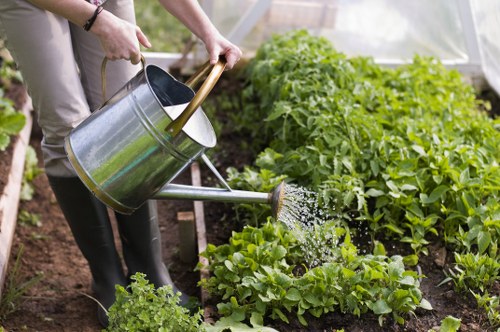 We also build partnerships with charities and community organisations so that reusable materials do not go to waste. Usable planters, surplus compost, gently worn tools, timber offcuts, and healthy plants may be passed on when suitable, helping local groups benefit from materials that would otherwise be discarded. Landscaping Crystal Palace projects sometimes produce items with plenty of life left in them, and charitable reuse is a practical way to extend that life while supporting good causes.
These partnerships are especially valuable when sites are being cleared, refreshed, or redesigned. Rather than sending everything directly into disposal routes, we assess whether items can be repurposed for community gardens, school projects, or charity-led green spaces. In this way, Crystal Palace landscaping and recycling become part of a wider circular economy: materials remain useful for longer, and the environmental footprint of each project is reduced. This is an approach that suits the area’s growing interest in reuse, repair, and more thoughtful consumption.
Transport is another major part of our sustainability strategy, which is why we operate low-carbon vans for many site journeys. Cleaner vehicles help reduce emissions when moving crew members, tools, and lighter recyclable materials between jobs and transfer points. For larger loads, route planning is used to minimise unnecessary trips and cut fuel use. In practice, recycling in landscaping Crystal Palace is not only about what happens to waste; it is also about how we move through the neighbourhood in a less carbon-intensive way.
We are also attentive to the environmental choices hidden inside routine tasks. Choosing refillable supplies where possible, ordering materials in efficient quantities, and separating packaging immediately on arrival all help reduce waste before it builds up. Even when a project involves major clearance, we aim to keep recoverable materials in circulation and to avoid contamination that would make recycling harder. This careful process supports a cleaner outcome for clients and a better system for the local area.
 Another area of focus is organic recycling. Leaves, prunings, grass, and other biodegradable material can often be transformed into compost or mulch rather than being treated as general refuse. That is particularly useful in a place like Crystal Palace, where gardens, terraces, and communal spaces often need regular upkeep. By returning organic matter to the recycling stream, landscaping Crystal Palace projects can support healthier soils and reduce the need for imported products.
We also try to be clear about the hierarchy of reuse, recycling, and disposal. Reuse comes first whenever safe and practical; recycling follows for recoverable materials; and disposal is reserved for the small fraction that cannot be diverted. This hierarchy helps shape day-to-day decisions and gives each project a more sustainable outcome. It is a straightforward method, but one that makes a measurable difference to local waste performance over time.
 Our long-term aim is simple: to make Landscaping Crystal Palace a model for responsible outdoor work that respects the environment, supports local recovery systems, and contributes to a lower-carbon future. By combining a high recycling target, local transfer stations, charity partnerships, and low-carbon vans, we can reduce waste across the whole lifecycle of a project. That commitment helps ensure that beautiful outdoor spaces are created with care for the community and the planet alike.